
23 Oct, 2026 OP-ED: The controversy over Christians and horror movies
Opinion/Editorial/Controversial Discussions
A WRN Article, shared by Writer & Editor Summer Lane
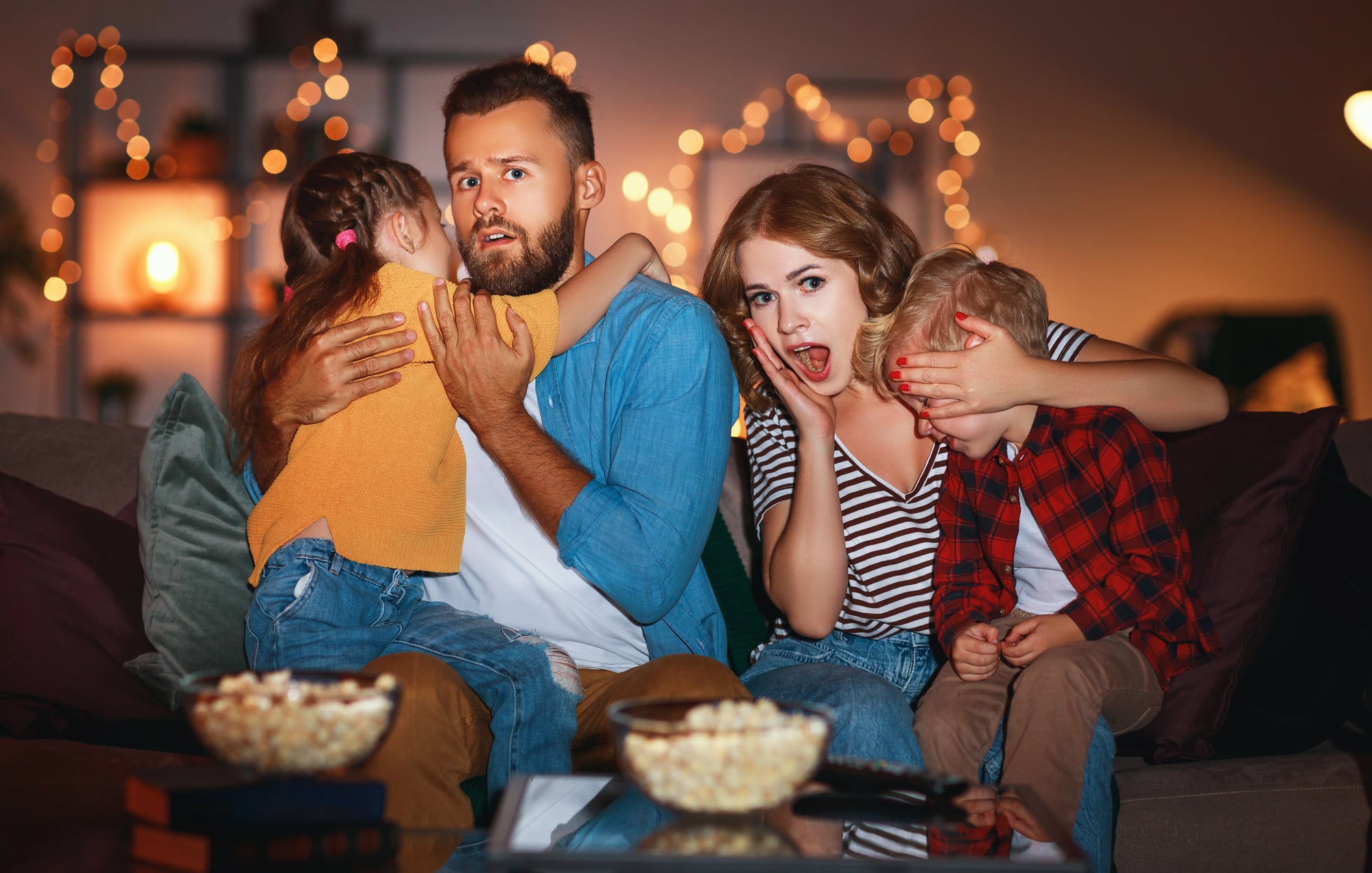
Photo: Deposit
This week, prominent podcaster Allie Beth Stuckey, known for delivering Christian-tinted hot takes on the internet, released a video arguing that Christians should not be fans of horror.
She was referring to horror movies, true crime podcasts, or books that make viewers/listeners deliberately scared.
This ignited a huge debate on social media about whether Christians should or should not watch scary movies of any kind. In the aftermath of this X-fueled controversy, Stuckey deleted the video – seemingly retreating from her position. With no explanation as to why she deleted it, one can only postulate that she was tired of getting criticized for her comments, which were admittedly a little broad.
I’ve made no secret of my personal disagreements with Allie Beth Stuckey, particularly on the issues of IVF and surrogacy, but the debate here is worth examining. Is it okay for Christians to watch or read horror films? Was Stuckey way off base?
The answer may be a little more common sense than you think.
The offended
“Imagine thinking horror movies can’t be Christian when all the best ones are[,]” said conservative commentator Jack Posobiec, on X.
Another well-known voice in the so-called “conservative” media sphere, Matt Walsh of the Daily Wire, chimed in: “I’d actually argue that horror is the most Christian genre of film. Obviously that’s not true of the torture porn stuff — films in the Texas Chainsaw Massacre tradition — but supernatural horror is often subtly Christian and sometimes very explicitly Christian. It’s the only category of film where the supernatural, demons, spirits, exorcisms, the Church, etc, are consistently taken seriously. The only genre where the priest might actually be the good guy. Horror has deep roots in Christian thought and tradition.”
Key points of Stuckey’s video are no longer available for reference, since the clip has been deleted, but it appears she specifically mentioned the film Signs, with Mel Gibson – an American sci-fi action thriller directed by M. Night Shyamalan, which focuses on an alarming and dark worldwide alien invasion.
Is this film considered horror? Not really. It might make some people uncomfortable, but it’s not explicitly a horror film. It’s a thriller. Don’t like it, don’t watch it.
Andrew Klaven, host of The Andrew Klaven Show, argued on X, “As I’ve written at length, there are many great horror stories that speak a terrible beauty into our lives as humans and Christians. But I will say in Allie Beth’s defense, on the rare occasion when I have cast an image or story out of my mind as corrupt or harmful, it has almost always come from a horror story.”
Amid the controversy, the film Hereditary was mentioned – an actual horror film. Released in 2018, the movie tells the story of a demon-worshipping cult that attempts to reincarnate one of the eight kings of Hell into a human body from a specific family’s bloodline. Having seen the film shortly after it came out, I can speak from personal experience: I could barely sleep for a week. It was my last foray into hardcore horror, barring post-apocalyptic zombie films, which are, admittedly, a guilty pleasure of mine.
I didn’t find that the grotesque themes of films like Hereditary, The Conjuring, or The Exorcist did anything to bring me a sense of peace and stability. And, as much as I love films like 28 Days Later, Carrie, or Train to Busan, I personally meter my intake of scary films and books, simply because if I’m constantly ingesting scary things, then my thoughts will be centered on scary things.
And therein lies the controversy, which can be taken to an extreme in either direction. How much is too much? How much comedy is too crass or too crude for Christians to watch? How much romance is too graphic or ungodly to read or watch? How many times can Christians watch secular films at all? Is watching The Chronicles of Narnia or The Lord of the Rings evil because there’s magic and witchcraft in it? How can Christians watch Frozen but turn their nose up at Harry Potter? There is little difference in subject matter between the two, when it comes down to it.
Where do Christians draw the line? Everyone has their own opinions on everything, and it’s exhausting.
And frankly, it’s getting a bit confusing out there.
It comes down to discernment and common sense
There is a verse in the Bible that sums up where Christians’ heads should be: Finally, brothers and sisters, whatever is true, whatever is noble, whatever is right, whatever is pure, whatever is lovely, whatever is admirable—if anything is excellent or praiseworthy—think about such things. (Phil. 4:8)
The verse is pretty self-explanatory.
Is what you are watching, reading, and listening to generally putting you in a headspace that points you to the Lord? Or is it pointing you to something much darker? The problem with horror, as most people have rightly pointed out amid this controversy, is that it focuses so heavily on the evil that the good is often sidelined or simply a last-minute addition to the story.
Horror does not necessarily glamorize or glorify horror; it simply sits in it, stews in it, and creeps into the darkest corners of your mind.
Circling back to Phil. 4:8, does that sound like something that is “excellent or praiseworthy” to meditate on? Probably not.
Listen: sometimes, you’re going to watch something scary or listen to something frightening. That’s okay. We just don’t need to live in that space, because as Christians, we walk in the light. If we are obsessed with evil things, then we need to ask ourselves why that is!
You will find that as you seek the light, you will continually pursue it and turn away from darker things: For you are all children of light, children of the day. We are not of the night or of the darkness. (1 Thes. 5:4)
So, what’s the bottom line? Use your head. Whether you’re indulging in true-crime serial killer podcasts or watching demon possession on the silver screen, there’s nothing wrong with doing a personal check: is this edifying? Is this uplifting? Is this good for my heart?
Are you noticing that you’re afraid more often than you should be? Can you sleep with the lights off at night?
Perhaps most pointedly, the Bible specifically tells us that a spirit of fear does NOT come from God. If you are constantly afraid, or ingesting content that is terrifying you, understand that this does not come from the Lord.
…for God gave us a spirit not of fear but of power and love and self-control, says 2 Tim. 1:7.
Pretty clear! Does that mean that all fantasy, thrillers, true crime, and action movies are off the table? Absolutely not. It just means we need to examine how content affects our own hearts and minds, and whether we can watch or listen with discernment, and apply that discernment to our entertainment habits.
Again, to be clear, I disagree with Allie Beth Stuckey on several things, but on this issue, I think she is generally on the right track. I don’t think Christians should repeatedly seek to terrify themselves, watch depictions of demon possession (which is very real), or live in a state of heightened anxiety because they believe everyone around them is potentially a deranged serial killer.
It’s okay to filter your entertainment. I think, as Christians, it’s also really important to refrain from unfairly judging or criticizing people for making slightly different entertainment choices than us – everyone is at a different point in their sanctification journey:
“Why do you look at the speck of sawdust in your brother’s eye and pay no attention to the plank in your own eye? How can you say to your brother, ‘Let me take the speck out of your eye,’ when all the time there is a plank in your own eye? You hypocrite, first take the plank out of your own eye, and then you will see clearly to remove the speck from your brother’s eye. (Matt. 7:3-5)
When it comes to entertainment, personal discernment matters. It’s between you and God, and as your walk with the Lord becomes stronger, you’ll find that your habits will organically change for the better.
Don’t worry about what everyone else is watching; worry about what you are watching, and listen to the convictions God has placed within your own heart.
This editorial represents one author’s opinion and does not necessarily represent the opinion of the Counter Culture Mom Show. This editorial appears here courtesy of Summer Lane, a writer, journalist, and political editor.
If you are looking for more information about how to live a counter-culture lifestyle with your kids, don’t forget to check out the Counter Culture Mom’s free parent media guide, which will point you in the direction of HUNDREDS of video games, TV shows, movies, apps, books, and more that will replace harmful, godless content with positive messages and good lessons. Download the media guide HERE.
*
Summer Lane is the #1 bestselling author of 30 books, including the hit Collapse Series and Resurrection Series. She is an experienced journalist and editor who is covering the White House and Trump administration. She owns Write Revolution News.
Summer is also a mom and wife who enjoys rural country living, herding cats, and gardening. She is passionate about writing on women’s issues, parenting, and politics from a theologically-grounded perspective that points readers to the good news of the gospel.
Download Our New Counter Culture Mom App to get our trending news and pop culture alert notifications. Connect with other parents in the Parent Chat section to gain helpful ideas on how to counteract the Pop Culture Cult!
Be sure to contact us if there is an issue you would like to have us write about! Our mission is to help parents deal with today’s lifestyle trends and how to biblically navigate them.
No Comments